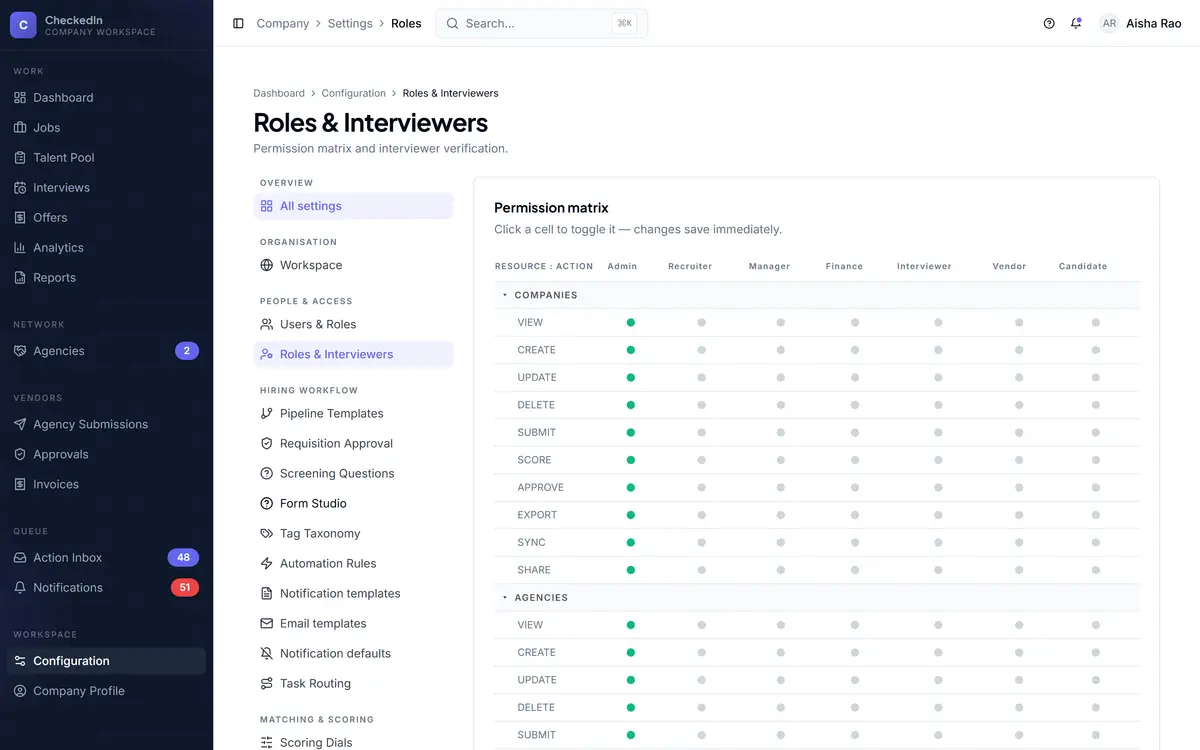
Add a stage on a Tuesday. Nobody mid-pipeline notices.
Editing never overwrites. It publishes a new version, and roles already running stay pinned to the one they started under. That single property is what makes people willing to change the process at all.
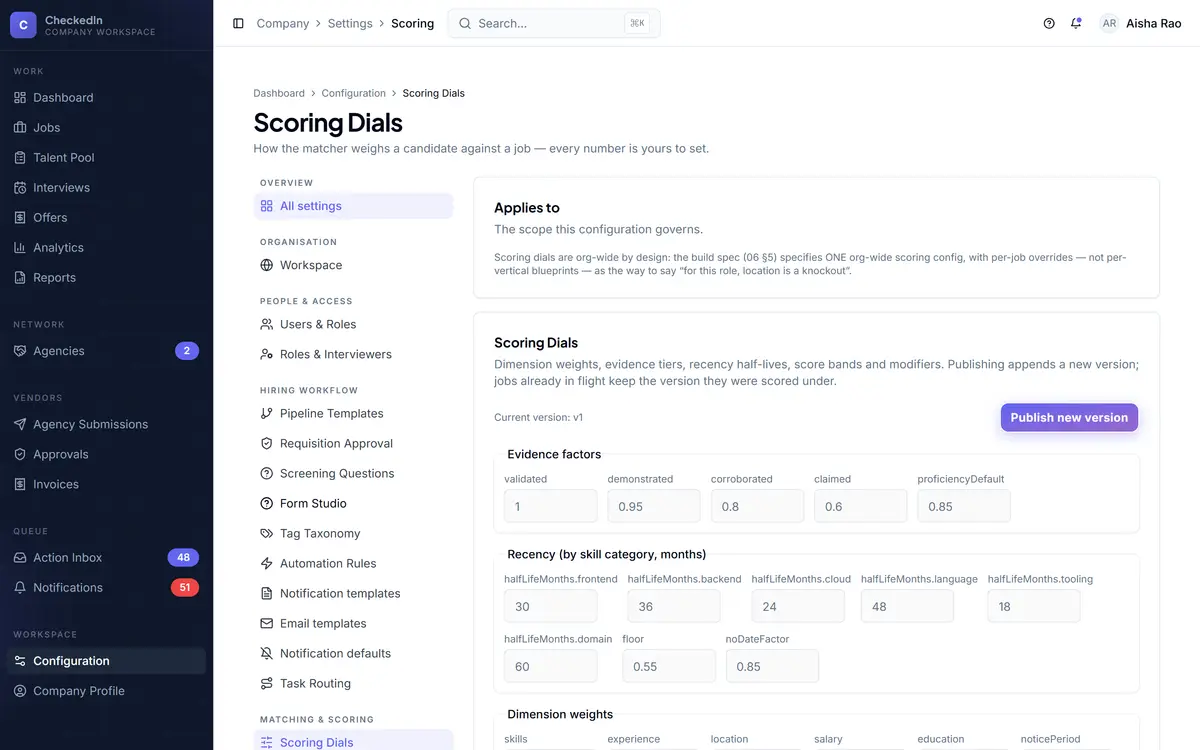
Real product screens. Figures shown in them are seed data from a demo workspace, not customer results.
Changing how you hire should not disturb people mid-process.
Two roles opened under it. They keep running this, to the end.
Every role opened from now uses it. Nothing was overwritten.
There is no edit-in-place path. A configuration object is appended to, never patched, which is also why the audit question who changed what, and when has an answer.
Sixteen things you own, out of 24 template kinds.
Most business behaviour in this product is configuration rather than code. That is a design choice with a cost: somebody has to set it up deliberately in week one.
Everywhere the product asks somebody a question, it is the same thing underneath.
Screening questions at application, an interviewer's scorecard, the careers apply form, and what you collect from someone who has accepted. One engine, four surfaces.
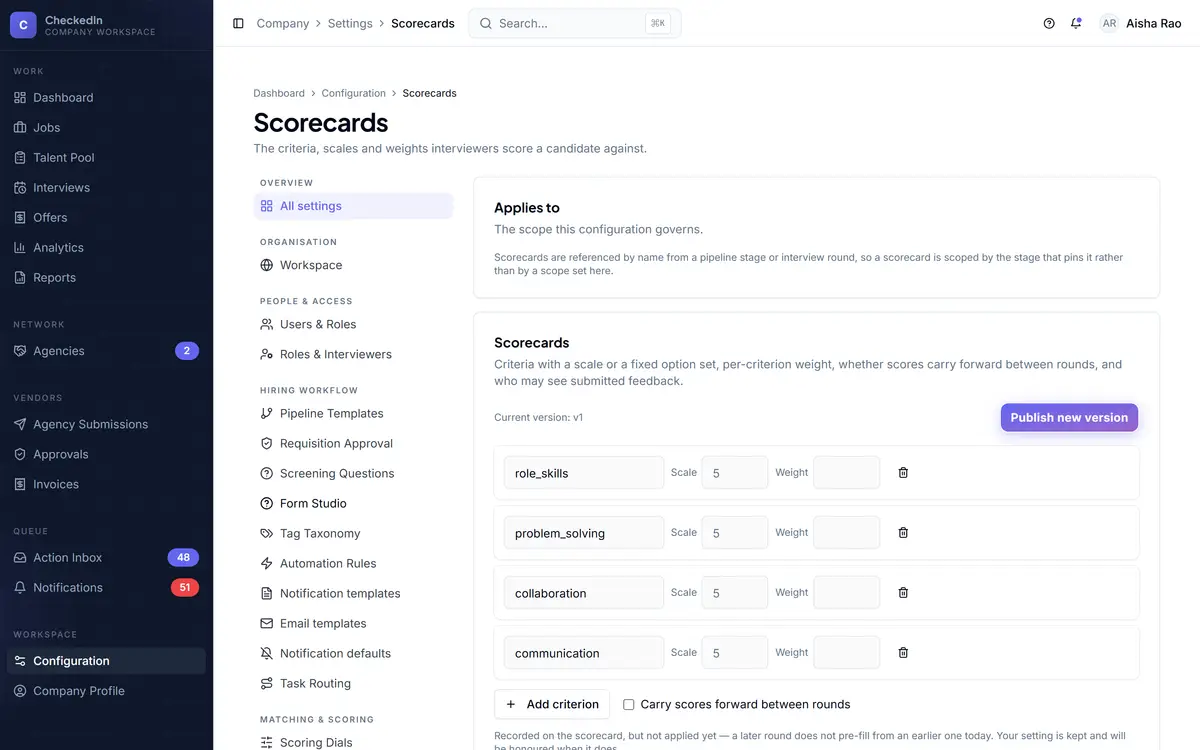
A role change takes effect on that person's very next click.
No logout, no waiting, no redeploy. Permissions are granted per action rather than per role name, so a recruiter can hold Reports and not Analytics, or the reverse.