
Hiring you can defend, line by line.
An applicant tracking system for hiring through agencies. The score, the skill and the fee each come with their evidence.
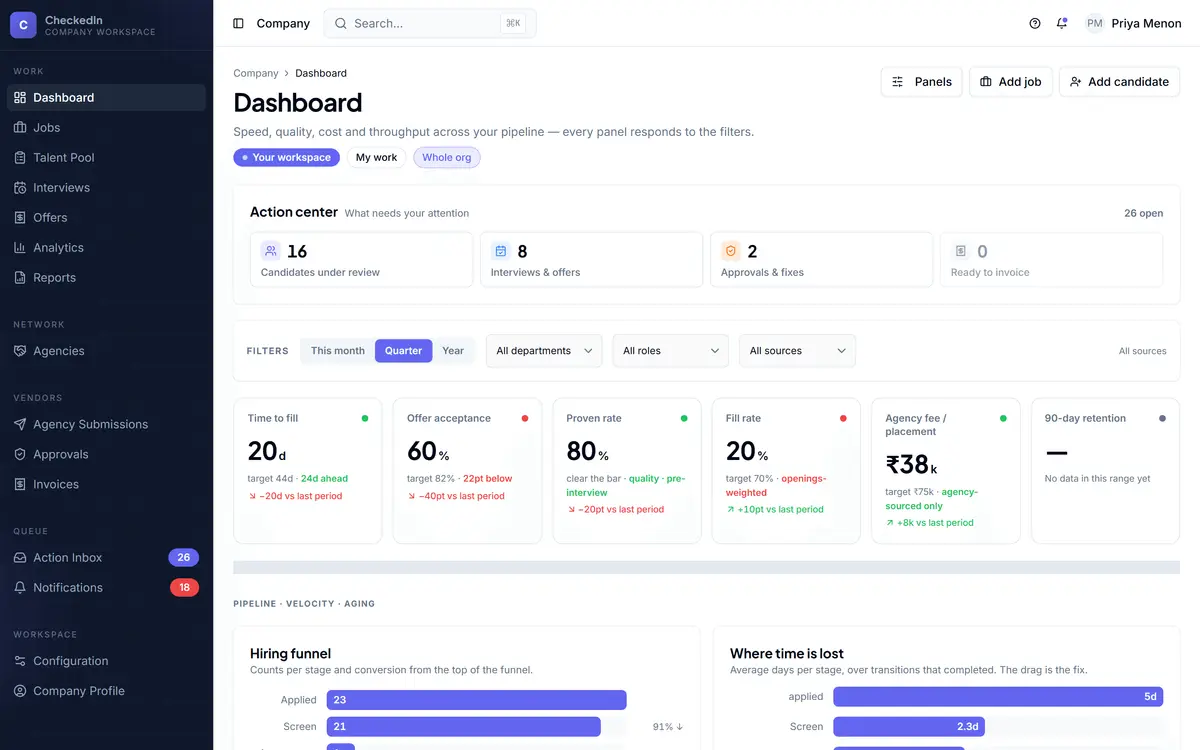
Real screens throughout this page, captured from a running build. The figures in them are seed data from a demo workspace, not customer results.
An applicant tracking system is the system of record for your open roles, your candidates, and where each one has reached. CheckedIn is one. What it adds to the category is that every number it shows you can be produced as evidence, which matters most when an agency is arguing about a fee.
Eighteen areas. One record underneath.
Four doors in. No new habits for anyone.
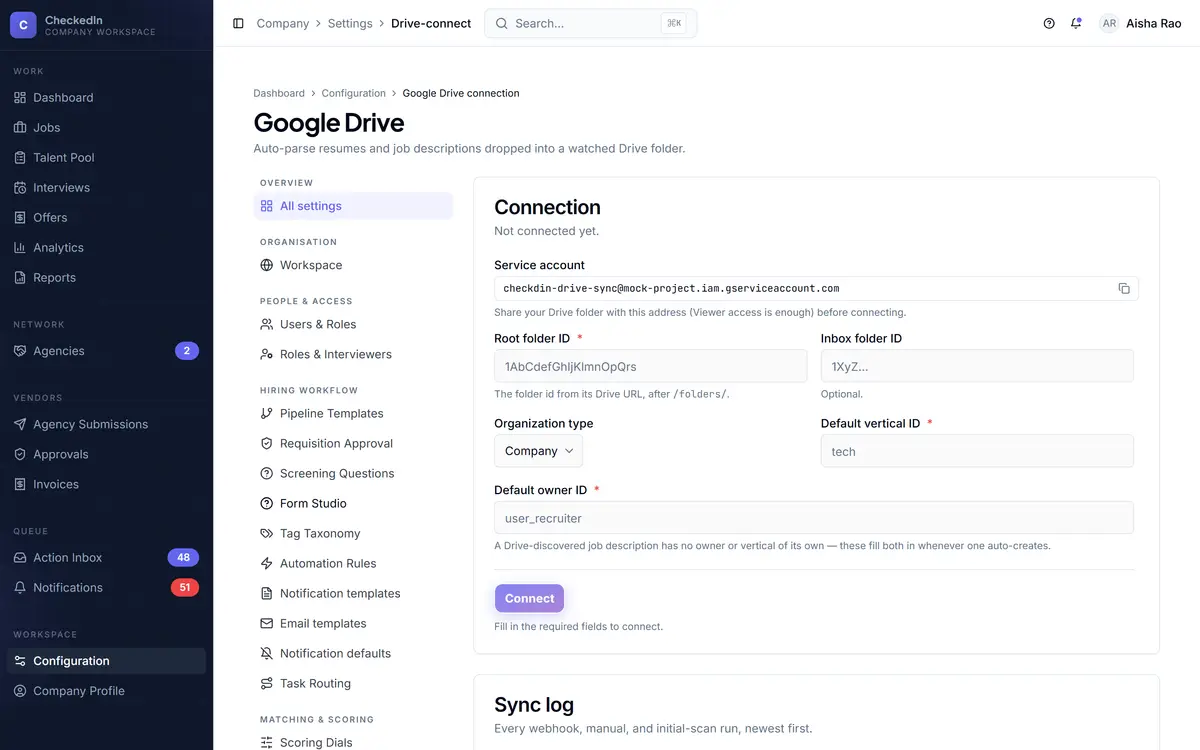
A watched Drive folder, the role's own apply-to email address, a spreadsheet from a job board, or your careers page. Same funnel whichever door. Drop the same file twice and nothing happens.
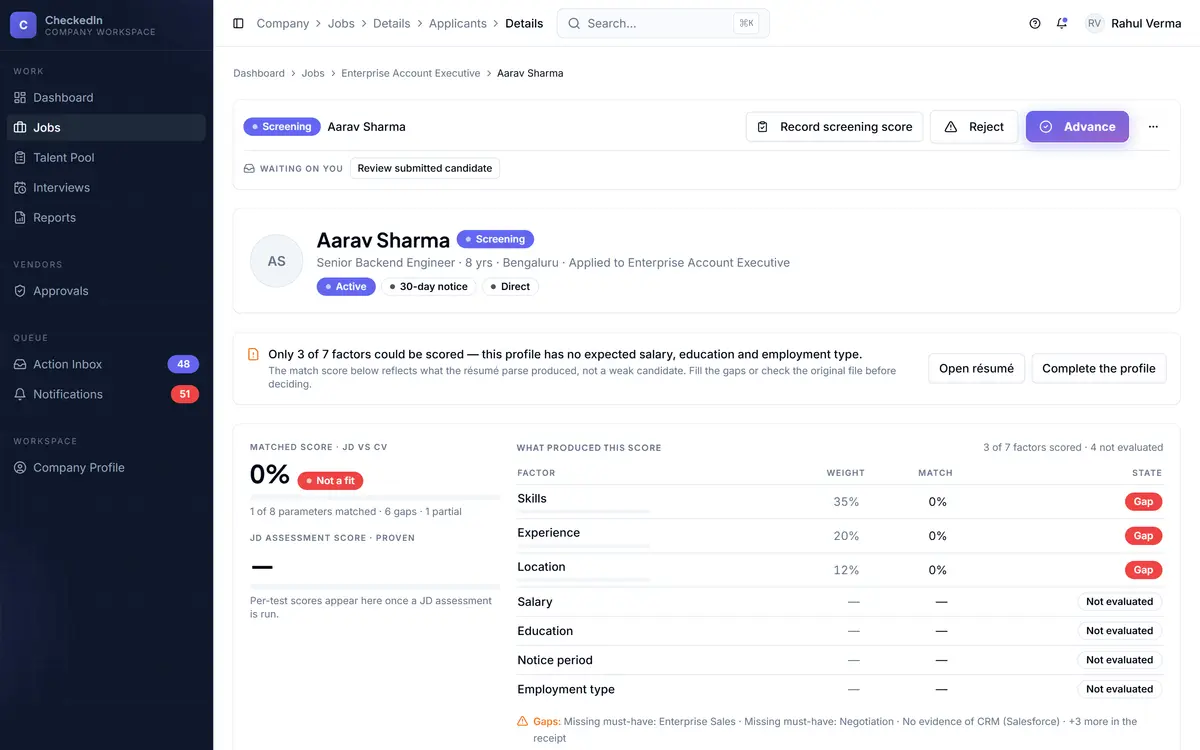
The number is the table, added up.
Seven factors, a row per requirement, and a column telling you whether Postgres matched PostgreSQL as a known alias or a lucky guess. Same shortlist ranks identically tomorrow.
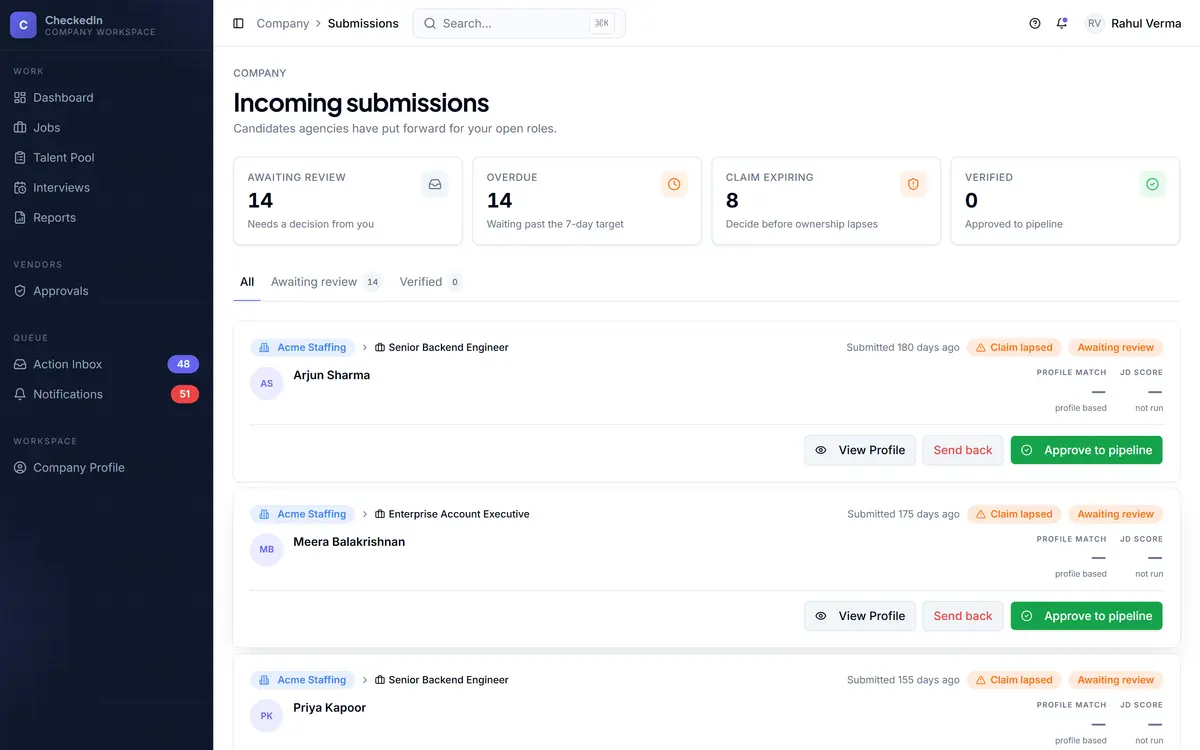
Two agencies, one candidate, one fee.
First submitter owns them for the window in your MOU. The server stamps the time, not the submitter. The second agency is told plainly rather than silently rejected.
Nobody logs in and goes hunting.
Anything needing a person becomes one task, for one person, deep-linked to the screen with the action loaded. It closes itself. It fires once, which is why people keep reading it.
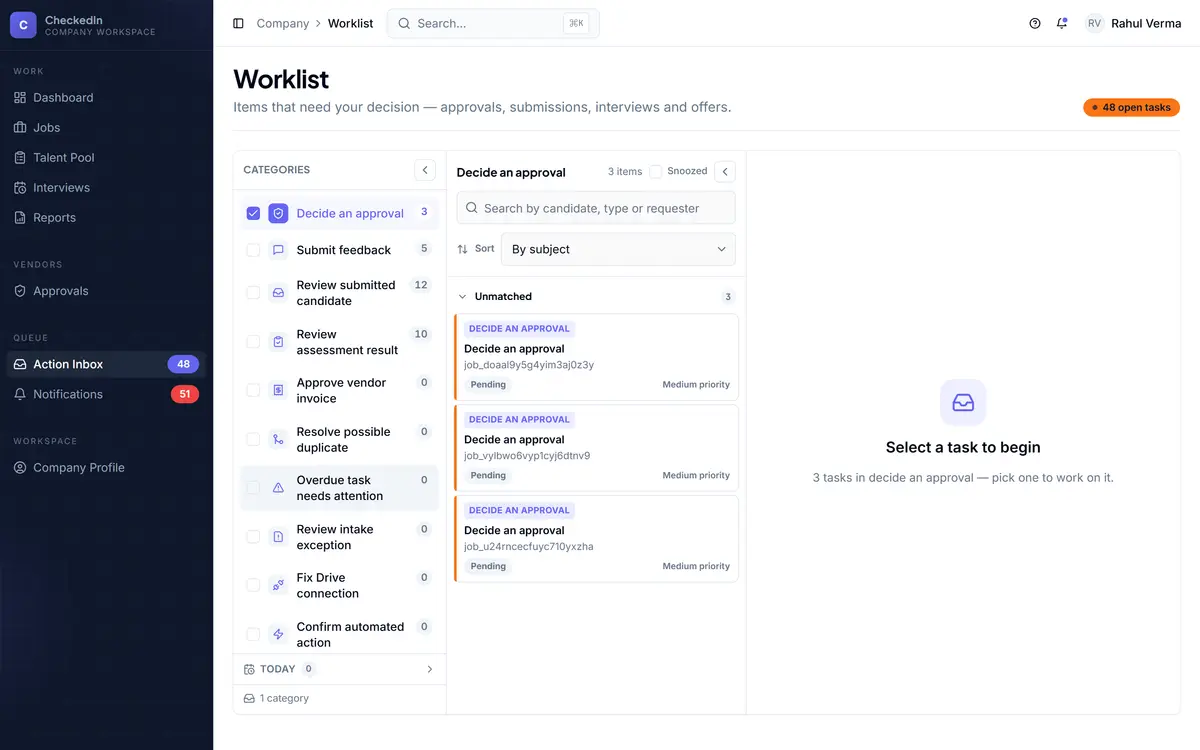
Analytics says how. Reports say which ones.
Every candidate stalled a fortnight. Every reservation lapsing this month. Every open role with its age and fill rate. Folded from history when you run it, so a tile always equals its list.
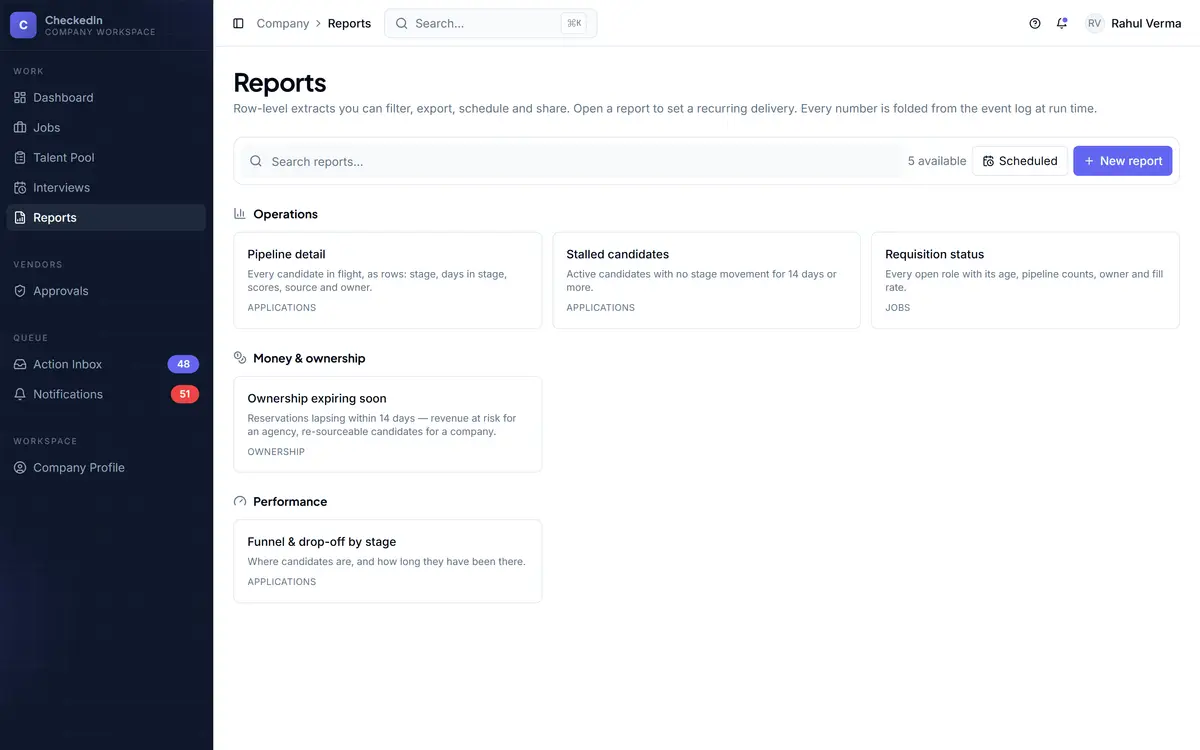
How you hire is configuration, not code.
Move a scoring weight and your whole database re-ranks at no cost. Stages, scorecards, screening questions, approval chains and fee terms are all editable. Editing publishes a version, and roles in flight keep theirs.
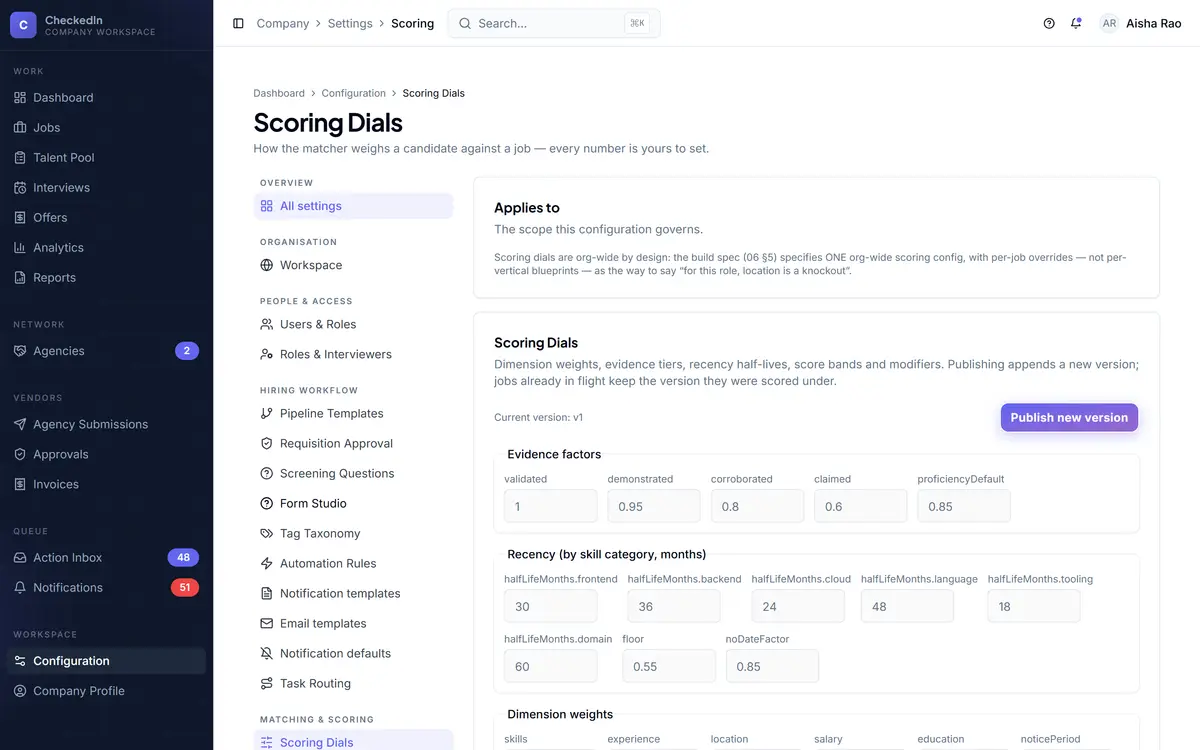
Company, agency, and interviewer. Same core.
An interviewer's sidebar is deliberately four items. An agency sees only the roles you opened to it. The narrow views are the design, not a permissions bug.
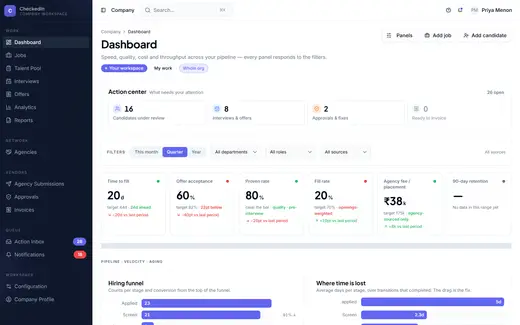
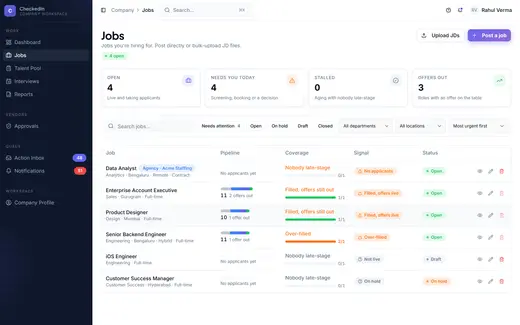
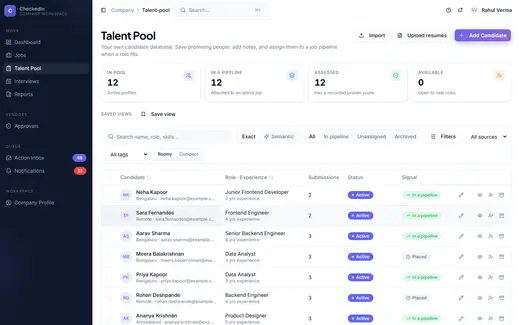
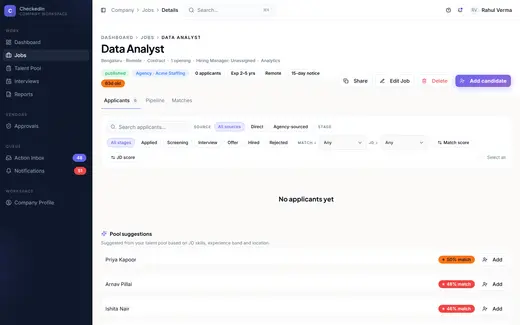
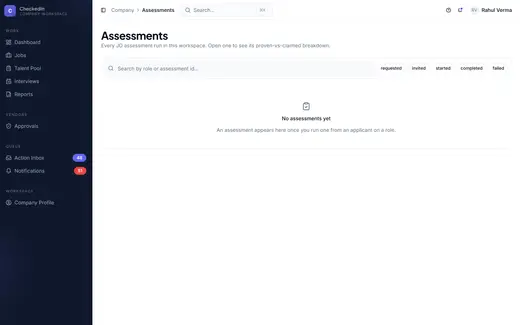
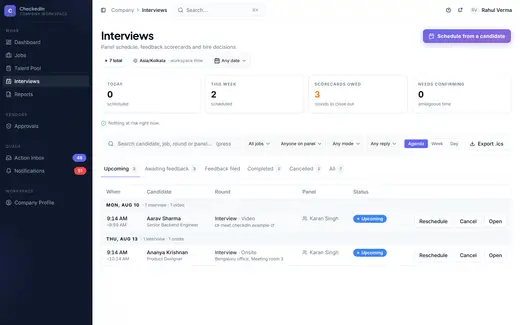
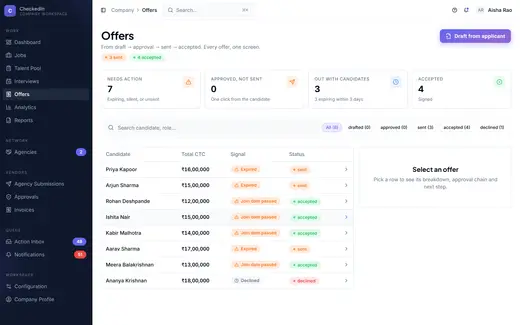
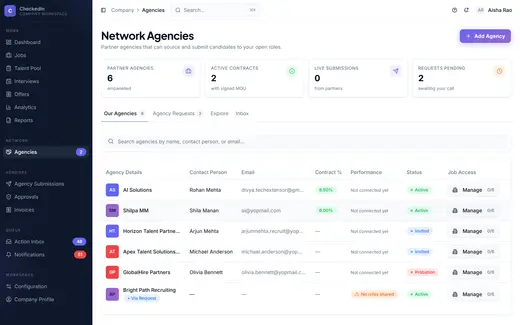

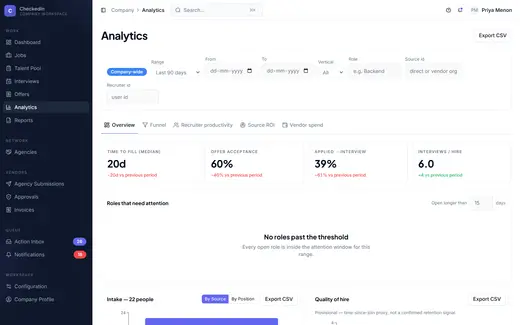
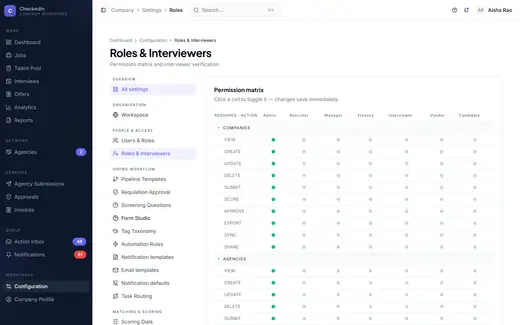

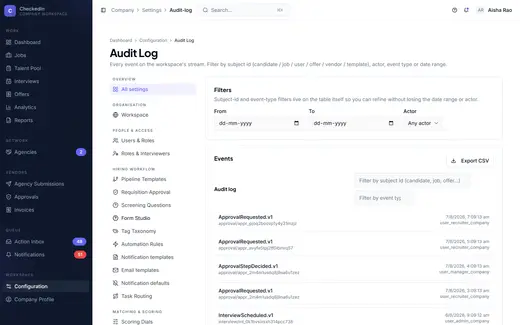
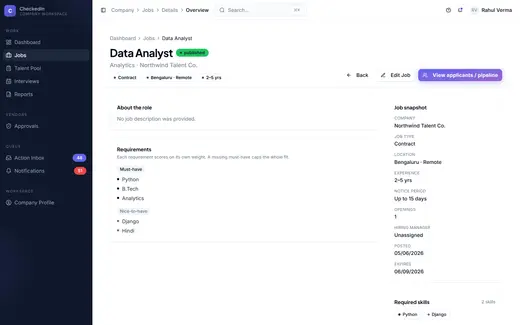
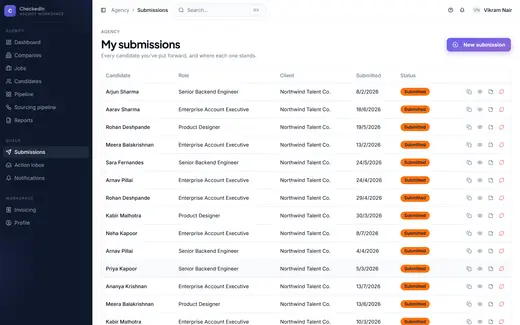
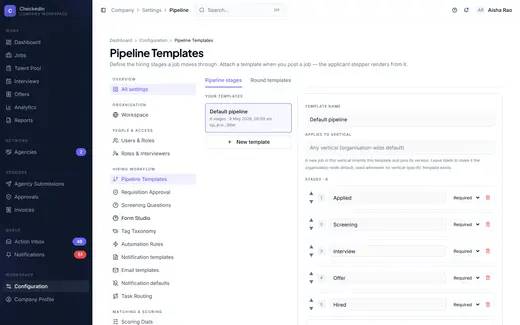
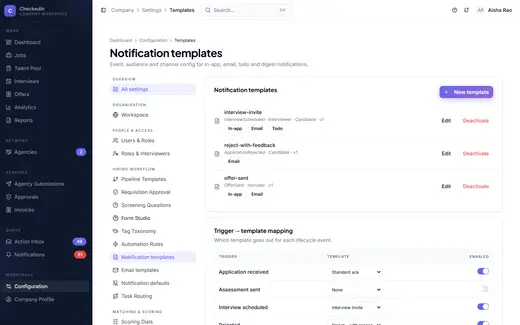
Scroll sideways. Every one is a real screen, not a mockup.
An ATS that owns its own measurement is a different machine.
Elsewhere a test score arrives as an attachment and the rank order does not move. Here it is written into the arithmetic that produces the ranking.
The list most vendors make you find in month three.
Bring a JD and three CVs. Watch them get ranked, with the working shown.
Your own role, your own candidates, and the receipt behind every number.